You have been annoyed by a seagull.
I’m not going to preface that statement with an “if you’ve been to the beach” or an “if you live near the ocean” or any such fluff. No. I’m confident that you, dear reader, whether you live in Honolulu, Hawaii or Madison, Wisconsin, have, at some point in your life, been annoyed by a seagull. In fact, I would go so far as to call conflict with seagulls part of the modern human experience. Seagulls are EVERYWHERE, and they’re VERY good at taking advantage of human habitation. Clashes with seagulls, as far as I’m concerned, are a right of passage. If you’ve never had a conflict with a seagull, seriously, tell me where you live, I would be fascinated to know.
So, you and everyone else has been annoyed by a seagull, big deal. Next I’ll be writing a blog post about how the sky is blue. But I’m here today to take a stand, in the limited public view of my personal blog, to resist propaganda and say that Seagulls get a bad rap. Sure they steal french fries and make a lot of noise, but so do I! I admit it, folks, I’m a seagull apologist.
And first, to preemptively address any criticism my inaccurately broad use of the term “seagull” may garner from the four or so actual birders that will come across this (and to warn some amateur birders about a pet peeve of the birding community at large): yes, I know that the appropriate term for animals in the subfamily Larinae is “Gulls.” I am aware that “Seagull” is a colloquial and scientifically inaccurate term, I realize not all gulls live on or near the sea, and that as a term the word “sea” is both confusing and unhelpful. That being said, I will continue in this post and in life to use “seagull” and “gull” interchangeably. I grew up calling them seagulls, laypeople get confused if you insist on calling them gulls. I’m sorry, gull folks, that I am a lowly plebeian who chooses common parlance. If it makes you feel better I use “blue jay” to describe any species of Jay that is blue, and that drives the corvid people completely up the wall. And I frequently call any arthropod a “bug” up to and including horseshoe crabs, so it’s not personal.

That may make you feel worse actually… I’ll make it up to you with my seagull defense campaign!
First, some facts! Did you know that seagulls are found on every continent on the planet? Better yet, did you know that they BREED on every continent (yes, even Antarctica, despite what the AI overview on Google might tell you)? EVEN better yet did you know that they breed at nearly every latitude and most major ecotypes, including, notably, the South American Garuma Gull which breeds exclusively in the Chilean Atacama desert and the Heermann’s Gull which breeds on a deserted, dry rock called Isla Rasa in the sea of Cortez which the share with Cholla cactus and essentially nothing else. If you can name a place on earth, there is probably a seagull designed to live there. Even mountaintops and alpine environments aren’t safe with enterprising birds like the Andean Gull breeding as high as 18,000 feet in elevation.
Gulls are largely omnivorous, and are considered opportunistic scavangers. Some gulls (the ones you may be most familiar with) like the American Herring Gull or the California Gull are kleptoparasites, a specific term for critters that get food specifically by stealing it from other animals or, famously, people. Every time a seagull snatches your lunch, that’s kleptoparasitism at work, and kleptoparasitism doesn’t discriminate. Gulls parasitize people, following fishing vessels to scoop up bycatch or snag a spare fish from the trough. They time their visits to garbage dumps to coincide with trucks bringing new waste, and with lunch rushes at restaurants to pick up fresh scraps, but people are not their only targets. Gulls have been known to harass Osprey and Hawks into dropping their food for the gulls to snatch up, a behavior I can personally attest to as I see it nearly every day at work. Gulls lurk behind specialist species like Oystercatchers, letting those birds do the work of cracking open tasty mollusks and the swooping in to steal the prize at the last moment. Those Heermann’s gulls I mentioned earlier are famous for snagging fish straight out of Pelican’s mouths. Smaller gulls like Laughing gulls or Bonaparte’s gulls are themselves often victims of larger gulls who bully them out of fish catches (this behavior extends to Terns—a close relative of gulls. I see Common Terns harassing Least Terns on the beach at least every week). I personally have seen gulls in Monterey bay snatching bycatch from sea Otters, and some quick research shows some people from the same area snapping pictures of seagulls stealing whole fish straight out of an otter’s hands (extra impressive considering I personally would not dare provoke any mustelid).
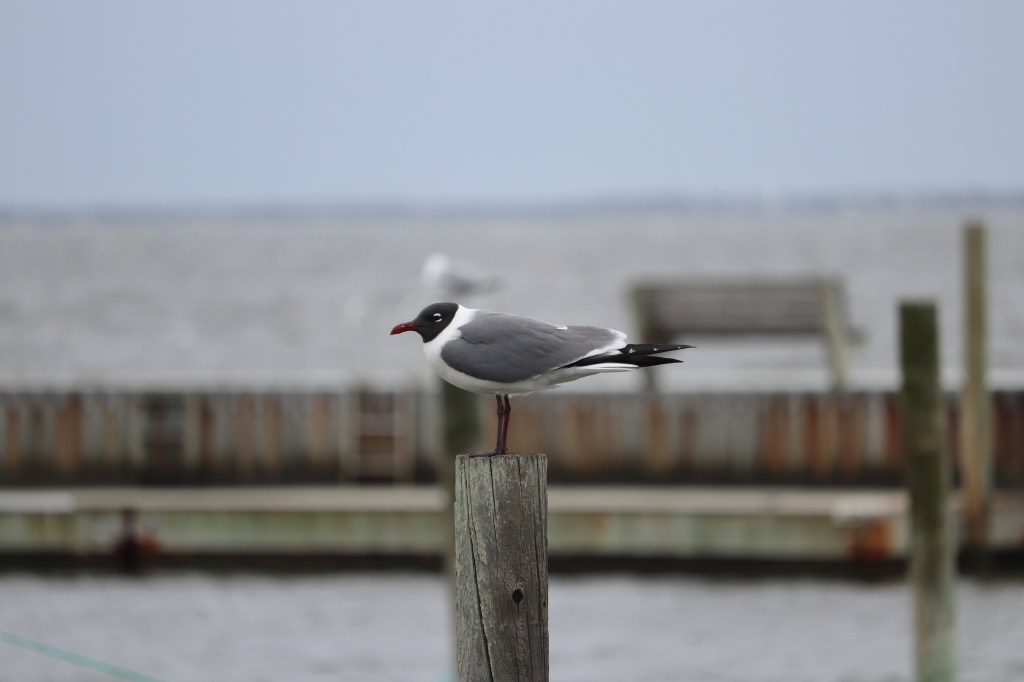
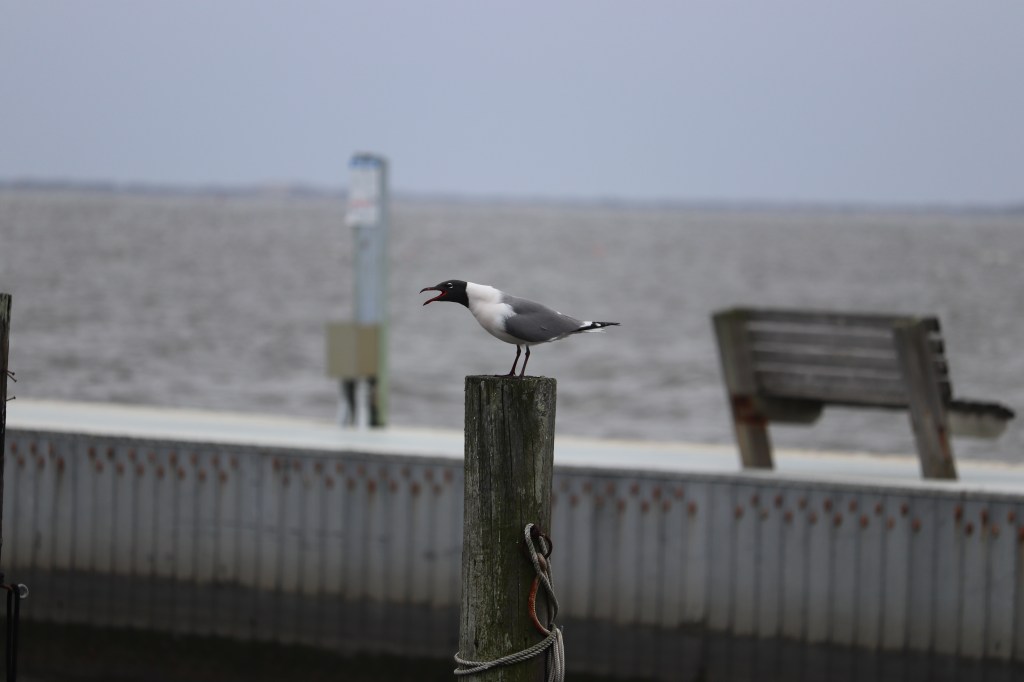
I spoke previously about invasive species like Starlings and House Finches being uniquely skilled at exploiting humanities resources, and gulls are another example of animals that have, in many cases, completely changed their natural histories to utilize the tremendous waste that human habitation provides. If my local Walmart parking lot is any indication, Laughing Gulls are doing a tremendous job at sifting through the mountains of garbage that humans produce for the occasional edible morsel. We often think of seagulls as associated with trash (the phrase “rats of the sky” which I hear applied both to seagulls and pigeons—who have their own defense post incoming—comes to mind), and for good reason. Gulls are generally omnivorous, and will gorge on whatever food makes itself available.
If you haven’t seen this video of a Greater Black-backed Gull swallowing a hare whole, do yourself a favor and check it out. As for other predation behaviors, I haven’t personally seen a gull snatch up another bird before but I have seen gangs of Piping Plovers and Least Terns aggressively chase gulls away from their nesting sites, so at least some birds are concerned about the possibility of a gull predation event.

Three piping plovers chase off a potential gull threat.
While seagulls may themselves dine on a variety of less than wholesome fare, there is some evidence that these birds know that this food is less than ideal. Studies have shown that gulls, who themselves eat a high proportion of human garbage and other “low quality” food, will preferentially select higher quality food for their chicks, consistently choosing fresh fish, seaweed, and arthropods over human cast-offs nearly every time. Even birds habituated to human settlement tend to switch to wild-caught prey for their chicks if the option is available to them. Gulls are excellent parents in other ways too. Adults often flock with their young into their first and second year, teaching them how to forage and helping them defend themselves until they reach maturity. And Gulls are fastidious parents, male and female. Like most monomorphic (that being, not visibly different between sexes) species, both parents contribute to chick rearing, and both parents can be equally defensive of their chicks when potential threats are nearby.
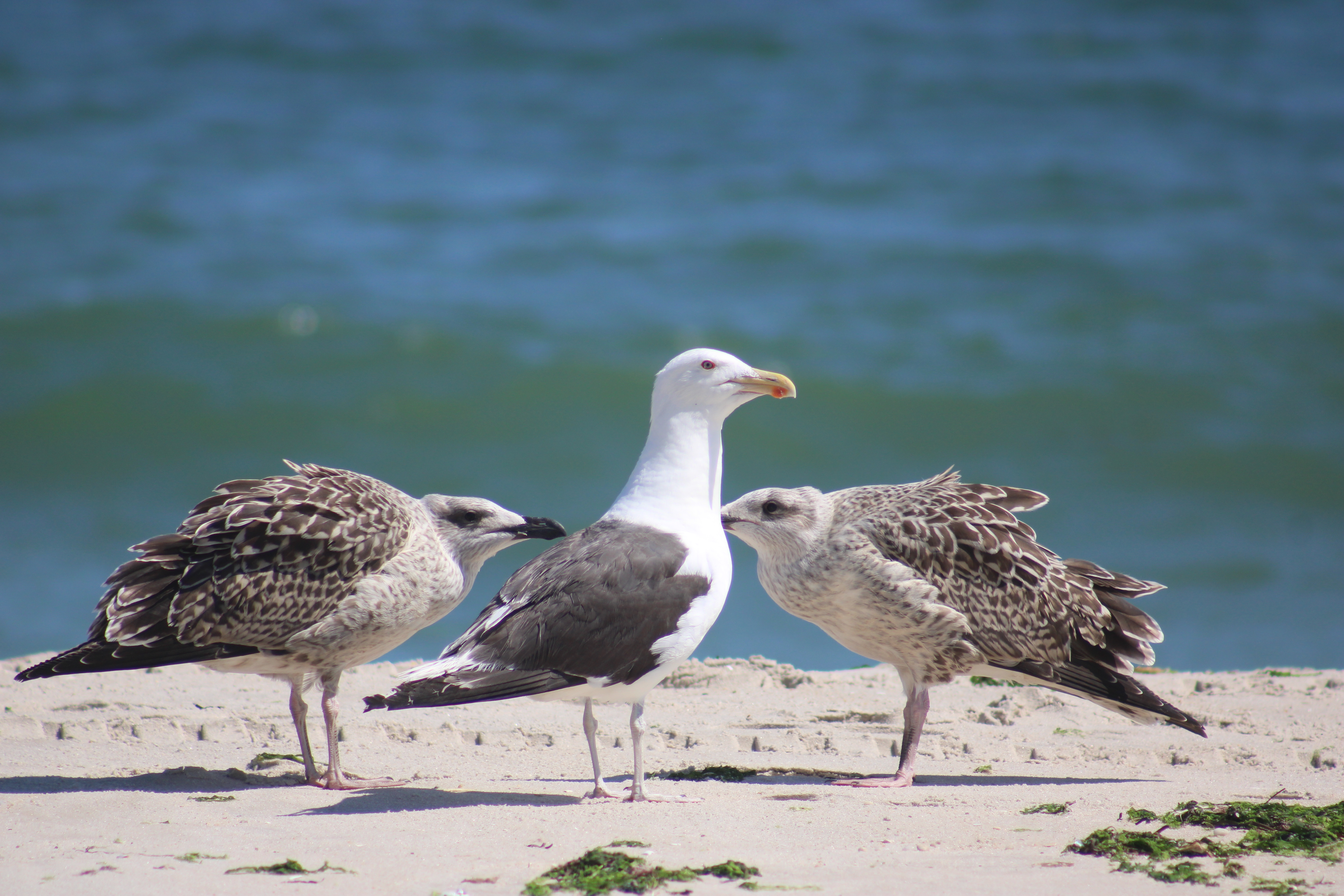
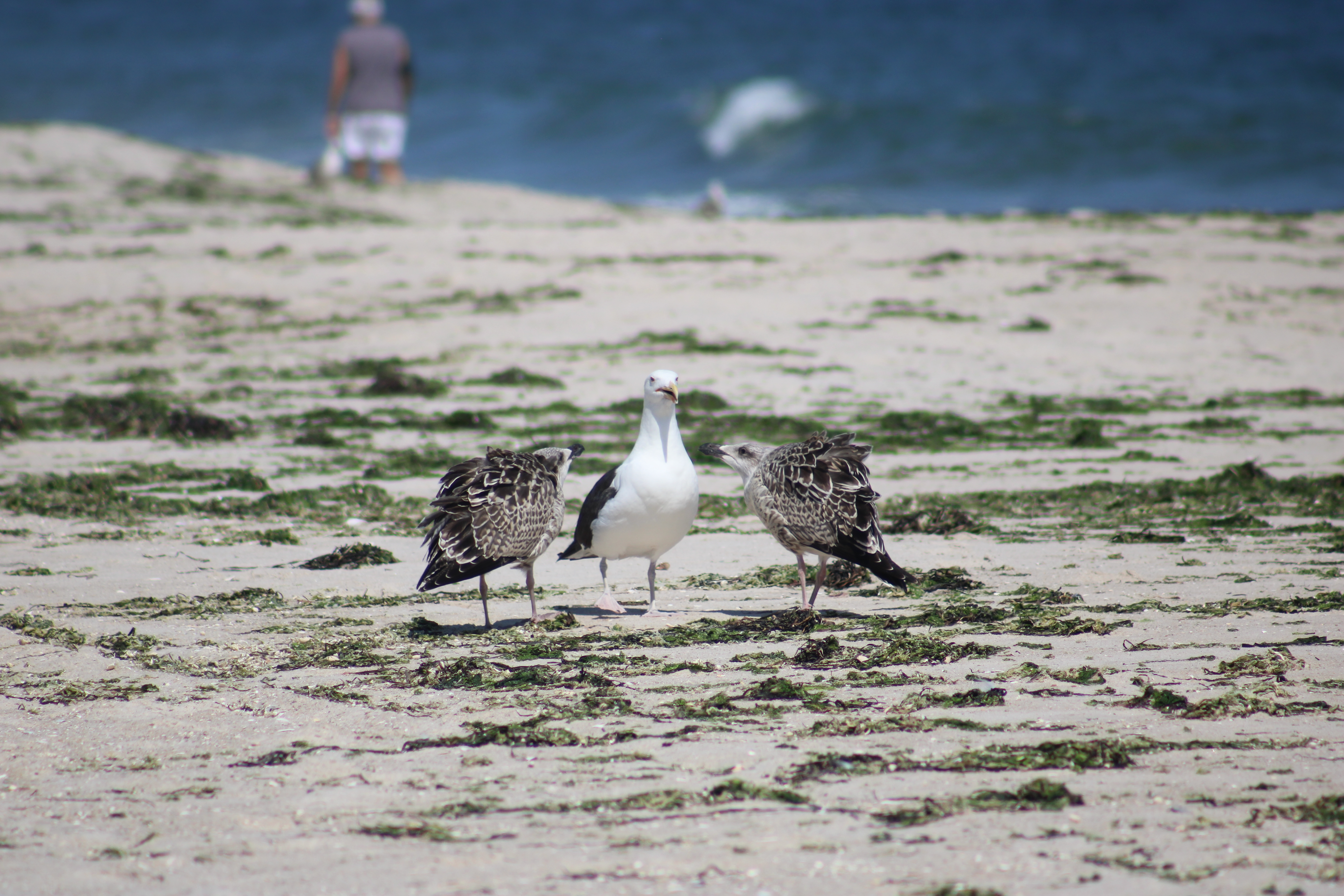
This Greater Black-Backed Gull is not happy with how close I am to it’s two chicks. Telling the males from the female parents can be tricky at a distance, this parent could easily be the mom or the dad for this brood.
Gulls are also substantially cleaner than most people give them credit for. You may have noticed that at the beach you often spot seagulls hanging out in the surf (when they aren’t lurking near humans), and this preference comes in part from their tendency to wash their food before eating it. Check out this sub-adult Ring-Billed Gull washing a dead crab before eating.

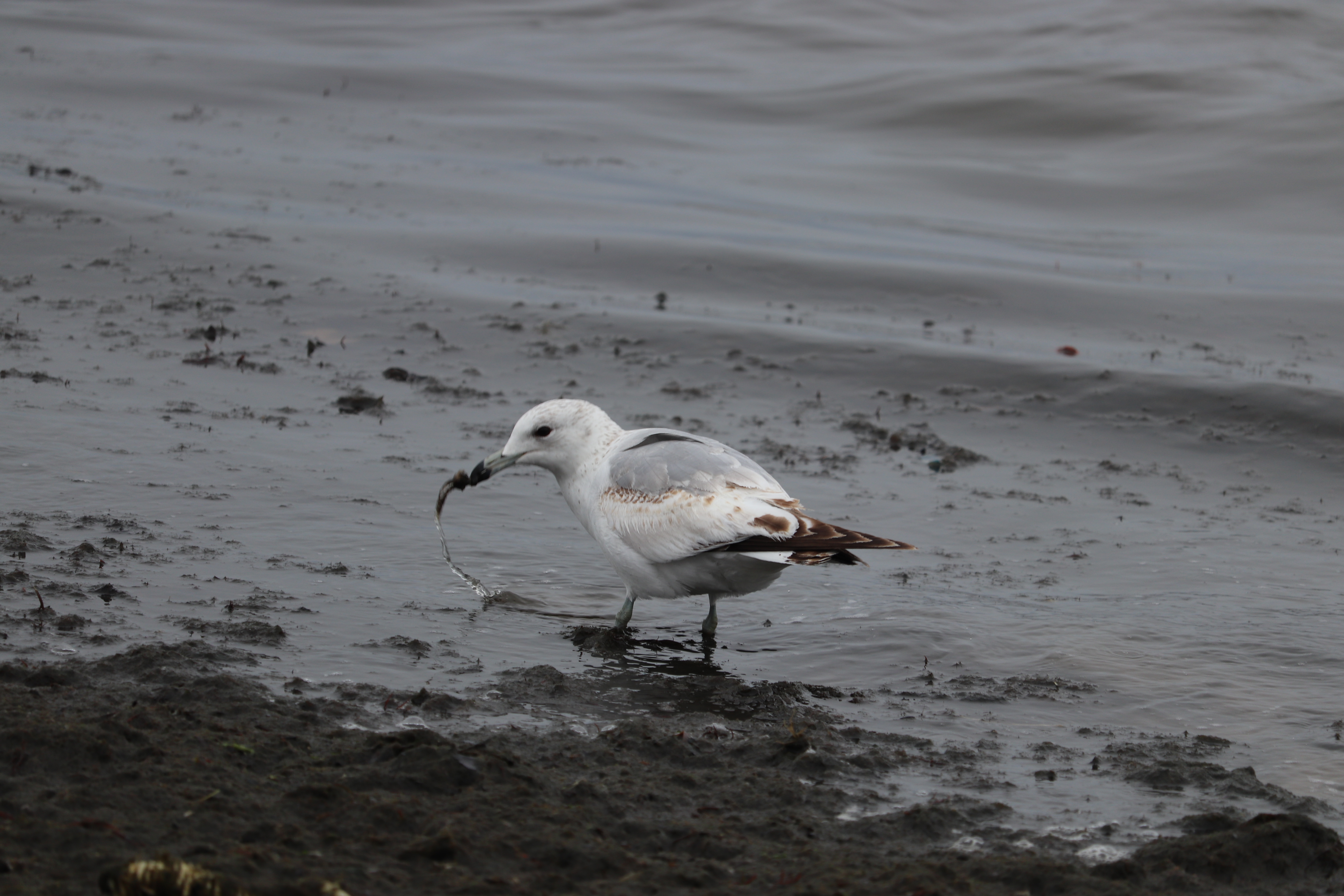

Sub-adult gulls often show specific plumage based on age. You can tell this clever young gull is two years old based on his light belly, dark eye, and the brown spotting on his wings.
Additionally, gulls, like many seafaring birds, are meticulously groomed. Studies show that during breeding season, gulls spend up to 15% of their total day grooming themselves and their mates (pair grooming improves mating bonds, especially important for seagulls, who mate for life). That’s nearly double the time spent by the average passerine. Next time you’re out on the beach or in a Walmart parking lot, pay attention to just how crisp the feathers are on the gulls there: poorly groomed gulls really stick out!

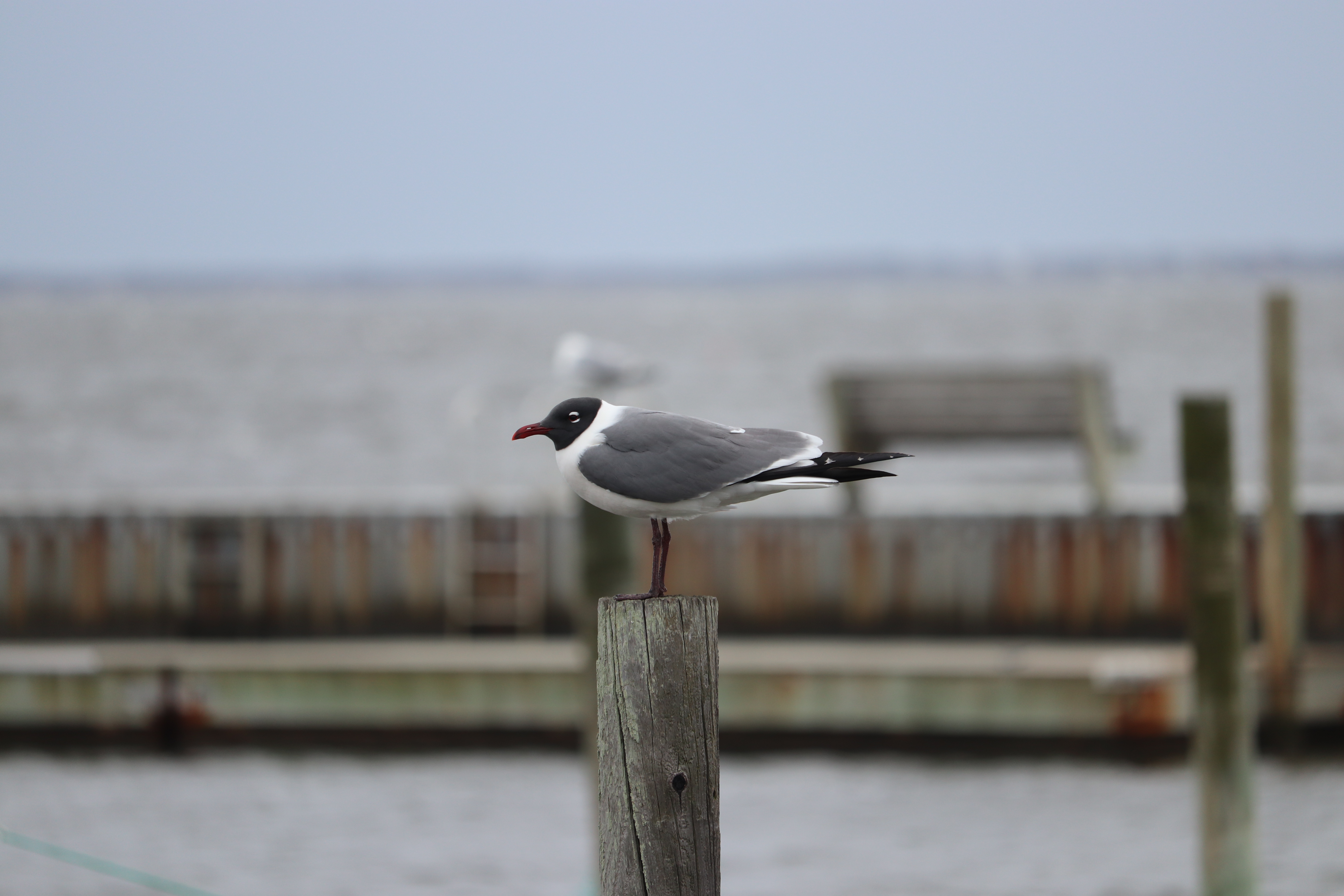
Not a feather out of place
As a biologist, however, one of the most crucial features of seagulls is their usefulness as indicator species. Indicator species are animals which can be used as proxies for the broader health of certain species, or of their ecosystem as a whole. Herring Gulls, in part due to their ubiquitous nature and varied diets, are frequently used to detect the levels of certain contaminants in aquatic ecosystems as they show symptoms of toxicity much faster than other large visible species. Historically, fishermen around the world have used gulls as indicators for good fishing spots, both for schools of fish offshore and for locating near-shore resources like oyster beds and tide pools; but, more modern research has added credence to this folk phenomenon. A 2022 study on Western Gulls utilized this species as an indicator for a variety of ecosystem features, from fish abundance to whale presence to ocean current changes, and proposed further research on seagull movement and behaviors as a proxy for rapidly changing, dynamic environments. Still further studies have looked at gulls as measures for the health of fishing lanes, contamination rates in bays and estuaries, and signals for migration timing for a suite of migratory bird and mammal species.
But as a birder, I really love gulls for their goofy, gregarious nature. There’s nothing quite like sitting on a boardwalk watching gulls herding their fledglings around, or dancing in the surf to scoop up crabs and sand fleas. I still remember the first time I heard a laughing gull cackle and realizing just how apt that name was, and I can’t count how many times I’ve jumped at the low grumble of a Greater Black-Backed Gull thinking it was a human voice. Gulls are everywhere, which makes them one of the most easily identifiable and accessible birds for young or new birders to begin to ID, and their fearless behavior makes them a bird no one can ignore. Not that I would ever want to ignore a seagull, that is.
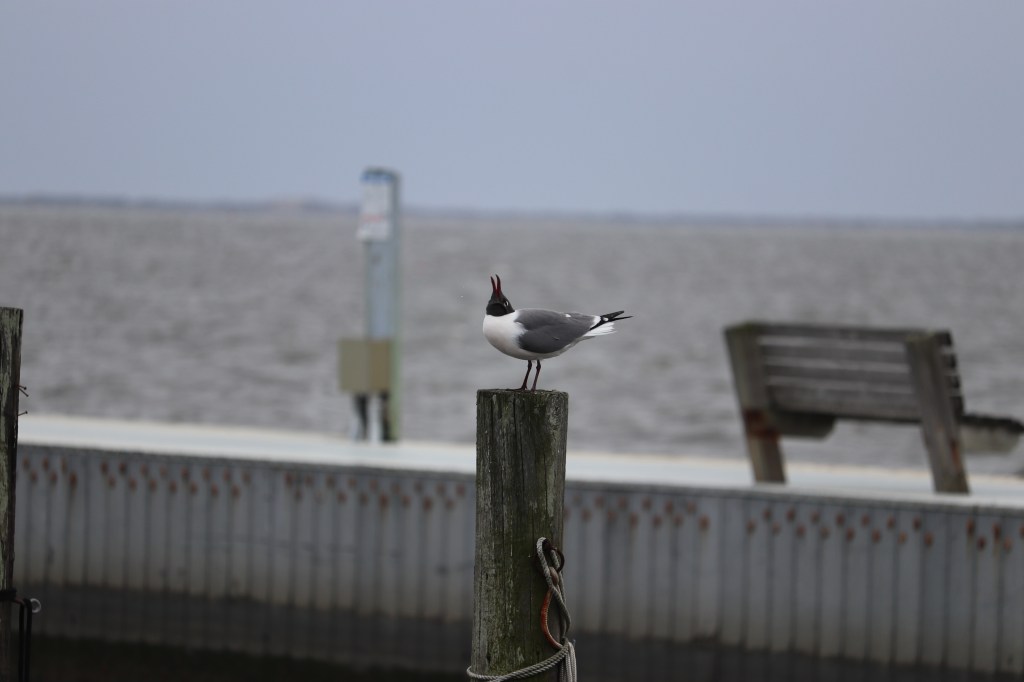
See you next time!


 Ornithobotanica
Leave a reply to clarilm Cancel reply